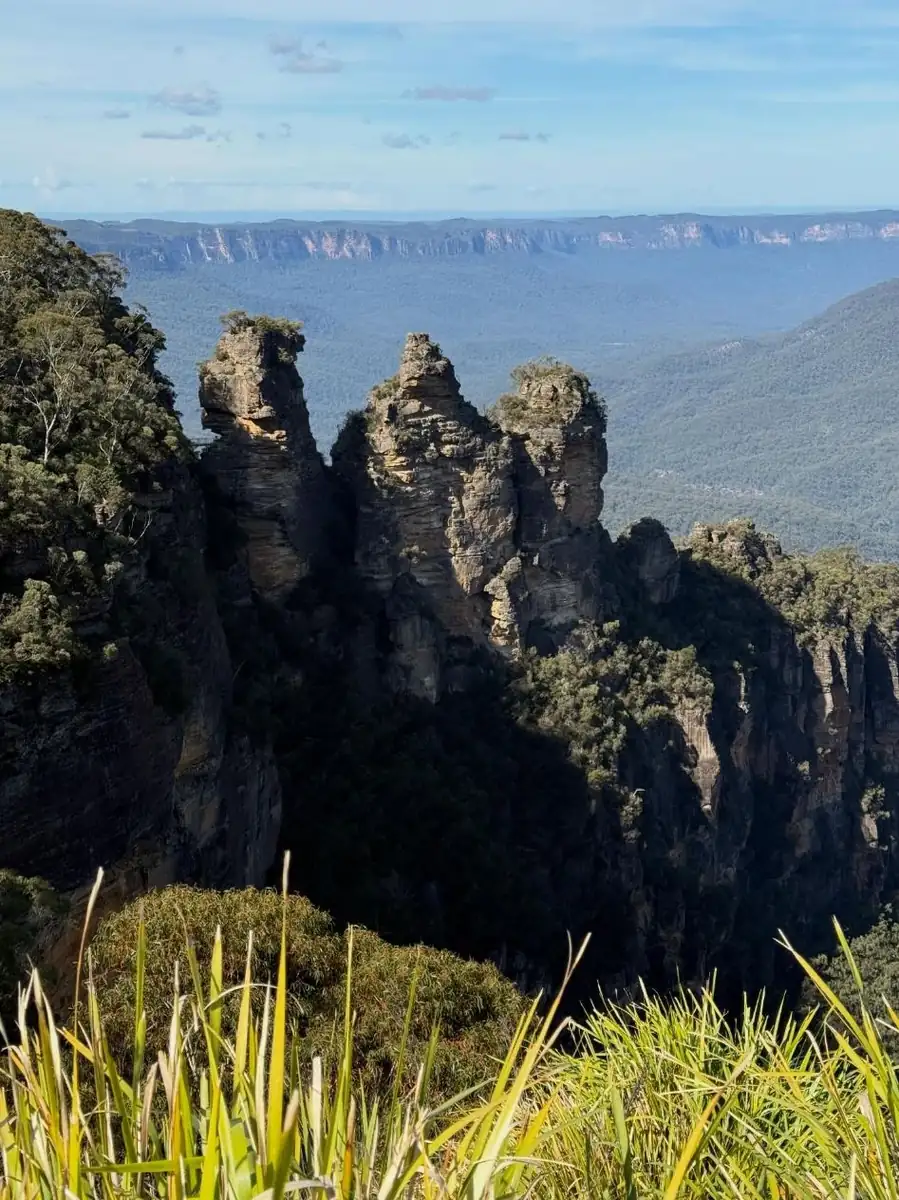
“Is the Three Sisters walk safe for a midnight stargazing hike?”— Short answer: It is doable, but only if you’re really ready for it, know what you’re getting yourself into, and can deal with the risks. This isn’t some casual stroll through the Blue Mountains that you’re going to knock off after dinner. The track around the Three Sisters above the Jamison Valley turns into a very different beast at night.
I’ve walked this part more times than I can count, starting from Echo Point Lookout and heading down toward the valley. One particularly dark and cold night gave me a harsh reality check – when your light gives out out here, things get extremely serious extremely fast. The place is absolutely magical under the stars, but it demands a lot of respect.
What Changes After Dark On The Track
At night, you lose your safety net. A path that feels straightforward during the day becomes tricky, uneven and sometimes downright disorienting.
You’re dealing with steep steps made from steel and stone on the Giant Stairway (also known as the Giant Staircase), narrow ledges and minimal path lighting beyond the lookout. And if mist is rolling through the valley, your depth perception becomes about as helpful as a wet map.
Terrain Reality Check
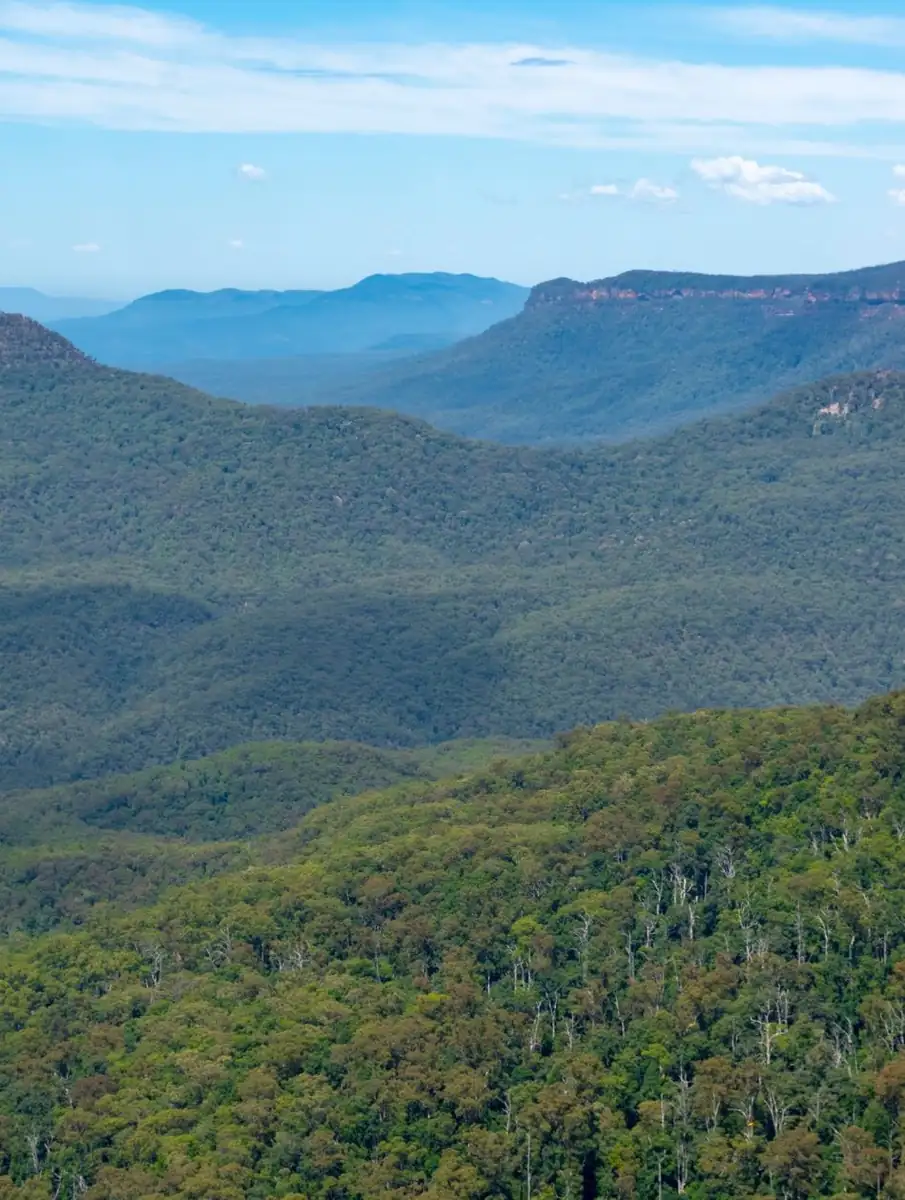
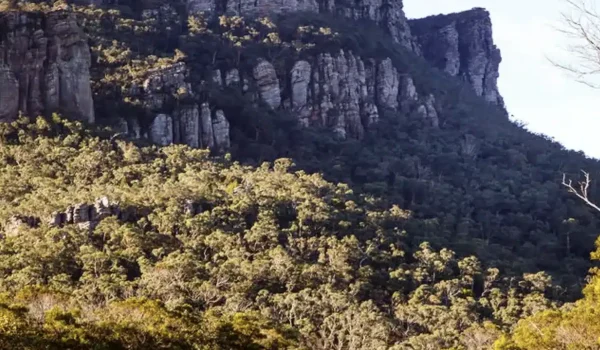
The walk starts near Echo Point inside the Blue Mountains National Park – part of the Greater Blue Mountains World Heritage area, known for its eucalyptus forests and rugged sandstone cliffs. But once you start heading down:
- Over 800 really steep steps on the Giant Stairway
- Narrow sections that lead you towards Honeymoon Bridge
- Surfaces that can get pretty slippery at night
- Signage that’s really hard to see along connecting tracks, like the Federal Pass.
During the day, your brain helps fill in the gaps. At midnight, you are basically relying on your torch and your instincts.
What You Actually Get From The Night Sky
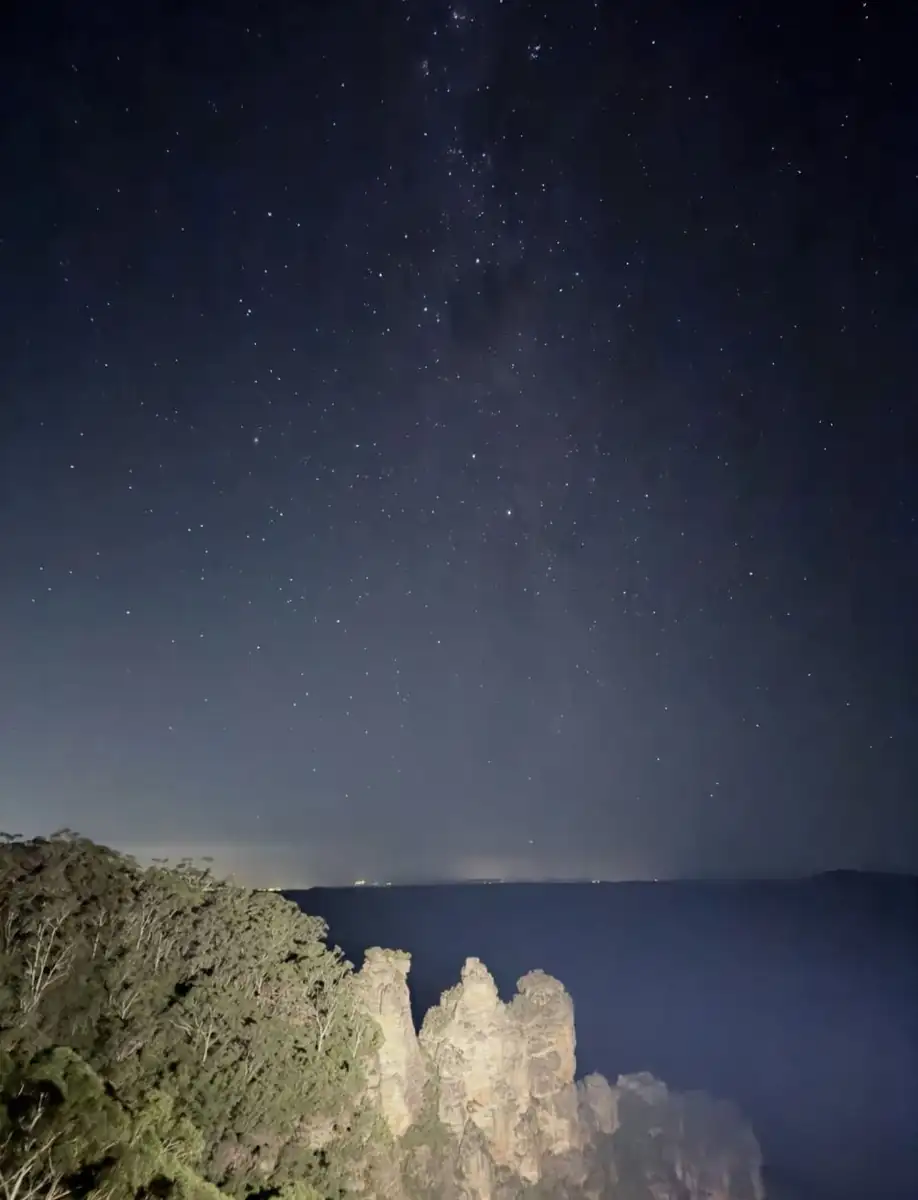
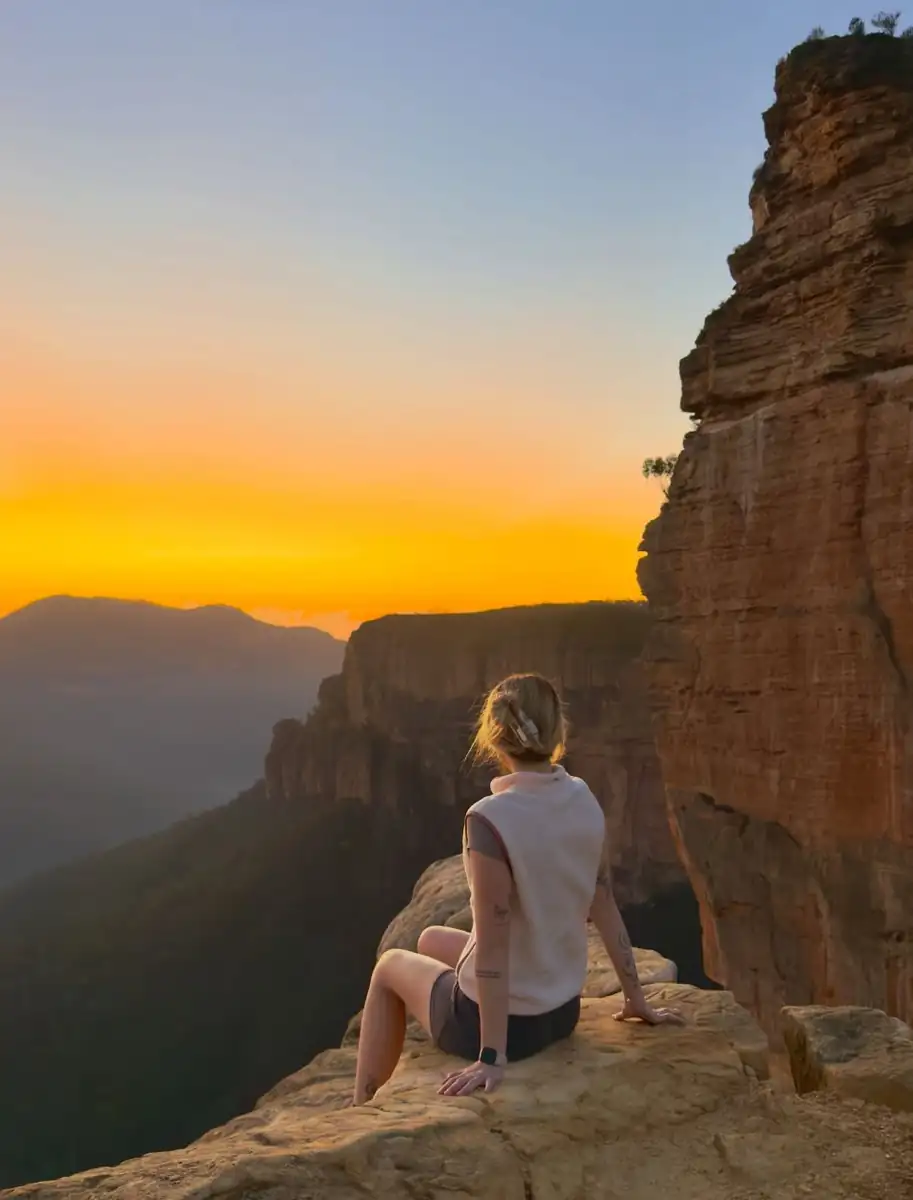
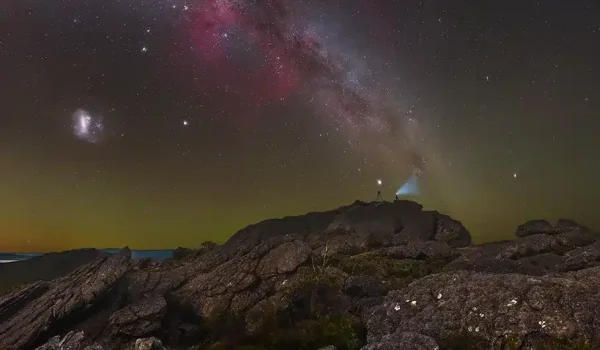
Let’s be honest – that’s the main reason you’re considering this. The night sky over the Jamison Valley is pretty special with minimal city light pollution.
From Echo Point and the surrounding lookouts, you can often see:
- The Milky Way stretches right across the valley
- Constellations really stand out above the cliffs
- The occasional meteor streaking across the sky
On a clear winter night, the sky above this heritage-listed landscape is pretty much as good as it gets without heading deep into the bush. A lot of people start in Sydney Blue Mountains tours, and then wonder if they can experience it at night – fair enough, but don’t rush into it without thinking.
Who Should And Shouldn’t Attempt This
This might sound blunt, but it’s true. Midnight hikes here aren’t for beginners.
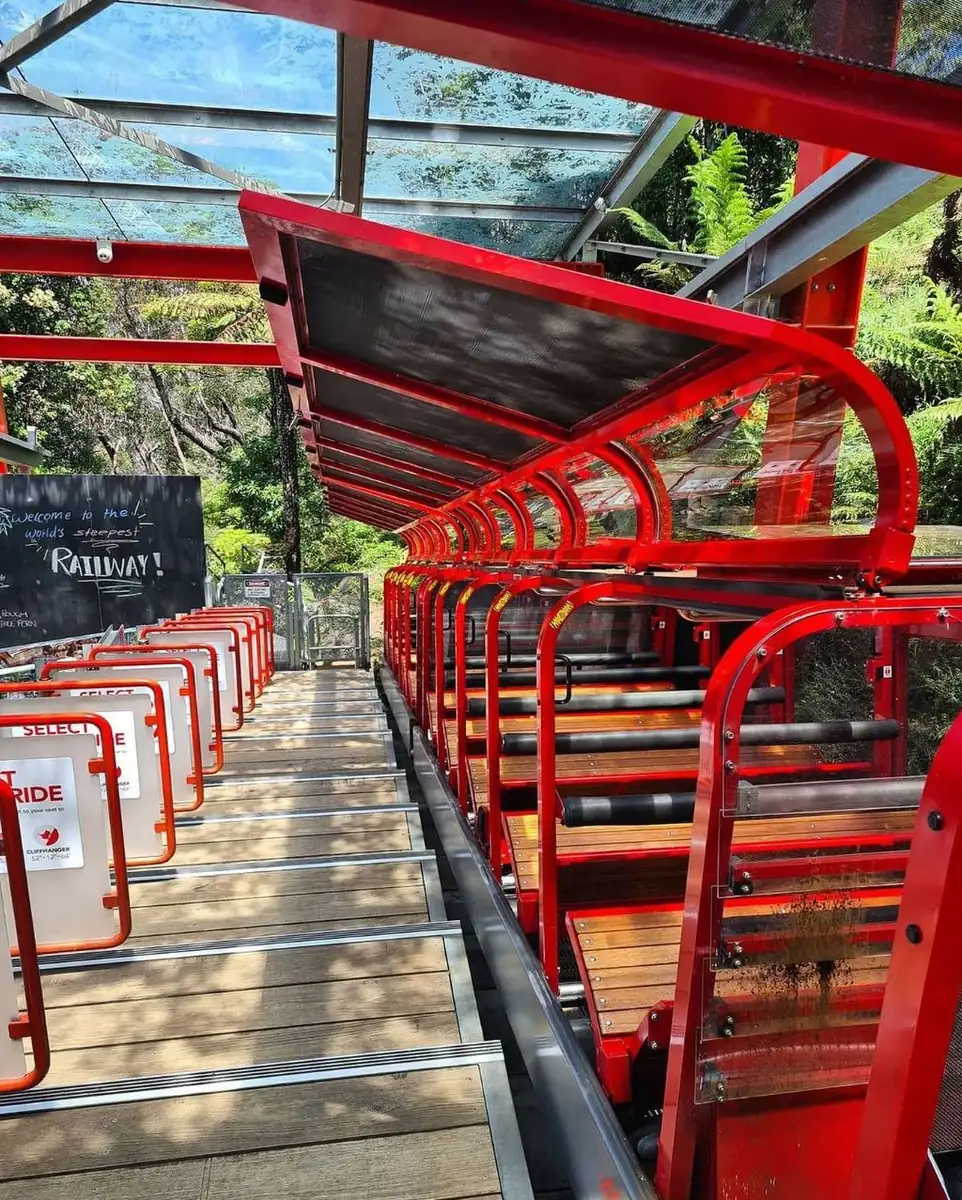
Experienced hikers who know their way around navigation, terrain and basic safety practices? Fine. Casual travellers who are just going to wander out from a day on the Scenic Railway or the Scenic Skyway? Probably not going to be okay.
NSW park guidance is pretty clear – most incidents at night happen because people weren’t properly prepared and got their navigation wrong – which is not some theory, it’s a pattern.
Understanding The Real Risks
| Risk Factor | Daytime | Midnight |
|---|---|---|
| Visibility | Clear | Severely limited |
| Navigation | Easy signage | Hard to follow |
| Slip/Fall Risk | Moderate | High |
| Wildlife Encounters | Low | Moderate |
| Emergency Response Time | Faster | Slower |
| Emergency Response Time | Faster | Slower |
The big one? Slip risk skyrockets on damp sandstone steps at night.
What Proper Preparation Looks Like
If you’re still keen on this one (and fair enough, I get it), you have to take it seriously. Treat it like a proper hike.
Essential Prep Checklist
- A proper flashlight or headlamp – don’t even think about going without a backup.
- A fully charged phone with offline maps or a GPX file – no excuses.
- Good quality footwear that’s not going to send you careening down a mountain – no exceptions on this one.
- Warm clothes – the valley gets bloody cold fast.
- Water and basic supplies – no need to get fancy.
- A Personal Locator Beacon wouldn’t hurt either – added safety’s always a good thing.
- Let someone know where you’re going and when you’re due back using a trip intentions form.
Skip any of these, and you can forget about having a good time – you’ll just be stacking the odds against yourself.
Seasonal Conditions That Change Everything
The Blue Mountains don’t take kindly to poor planning – conditions can change overnight on this plateau.
What To Watch For
- Winter: Looks like the perfect stargazing night, but icy steps and sub-zero temps are waiting for you.
- After rain: The tracks become slick – Dardanelles Pass Loop Track is a nightmare after rain – steer clear of it at night.
- Fog: Can roll in so quick you won’t even see it coming, and then you’re buggered.
If the track’s wet, forget the midnight descent. Full stop. Don’t even think about it.
Respecting Country And Landscape
This place is part of a story that goes way beyond tourism. The Darug People and First Nations heritage is all tied up with this landscape. The Three Sisters themselves are part of an Aboriginal legend, and every lookout, valley and cliff has a cultural meaning that’s way deeper than some bloody tourists.
Night visits aren’t out of the question, but treat the place like you mean it—no loud music, no rubbish, no wandering off track.
Better Ways To Enjoy The Stars Safely
If all you want to do is stargaze, you’ve got better options than tramping off into the dark.
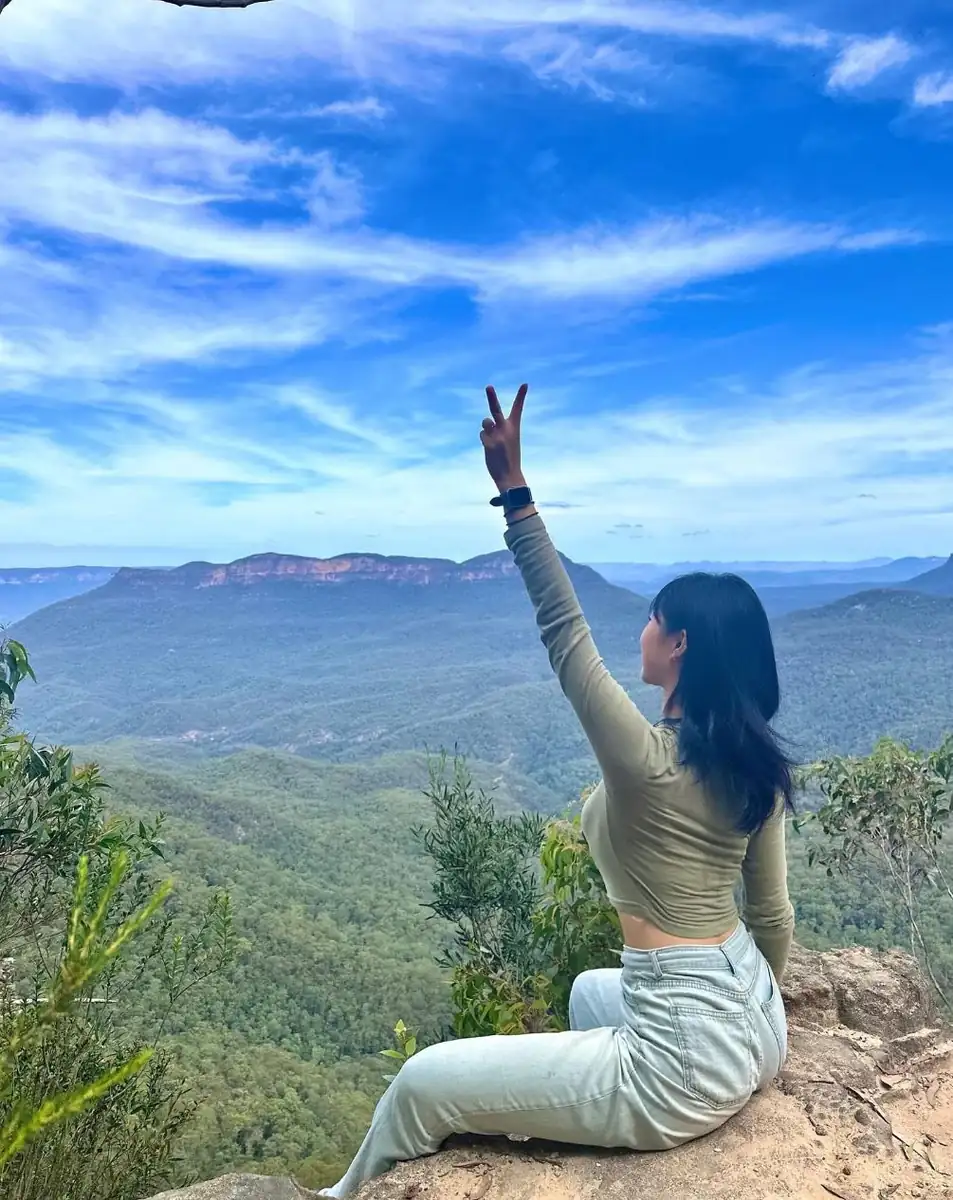
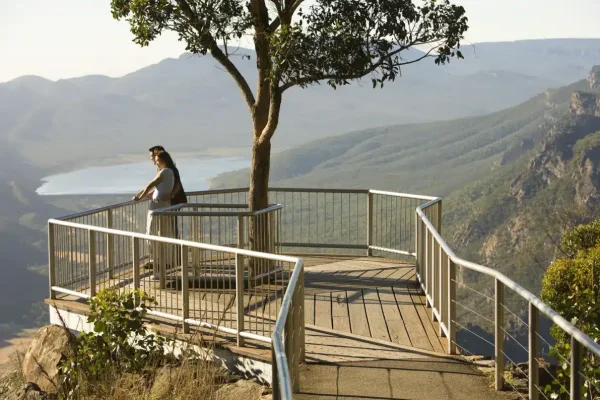
Hit up well-formed lookouts like Echo Point or do the Prince Henry Cliff Walk instead – easier to get around and safer with a view of the Jamison Valley.
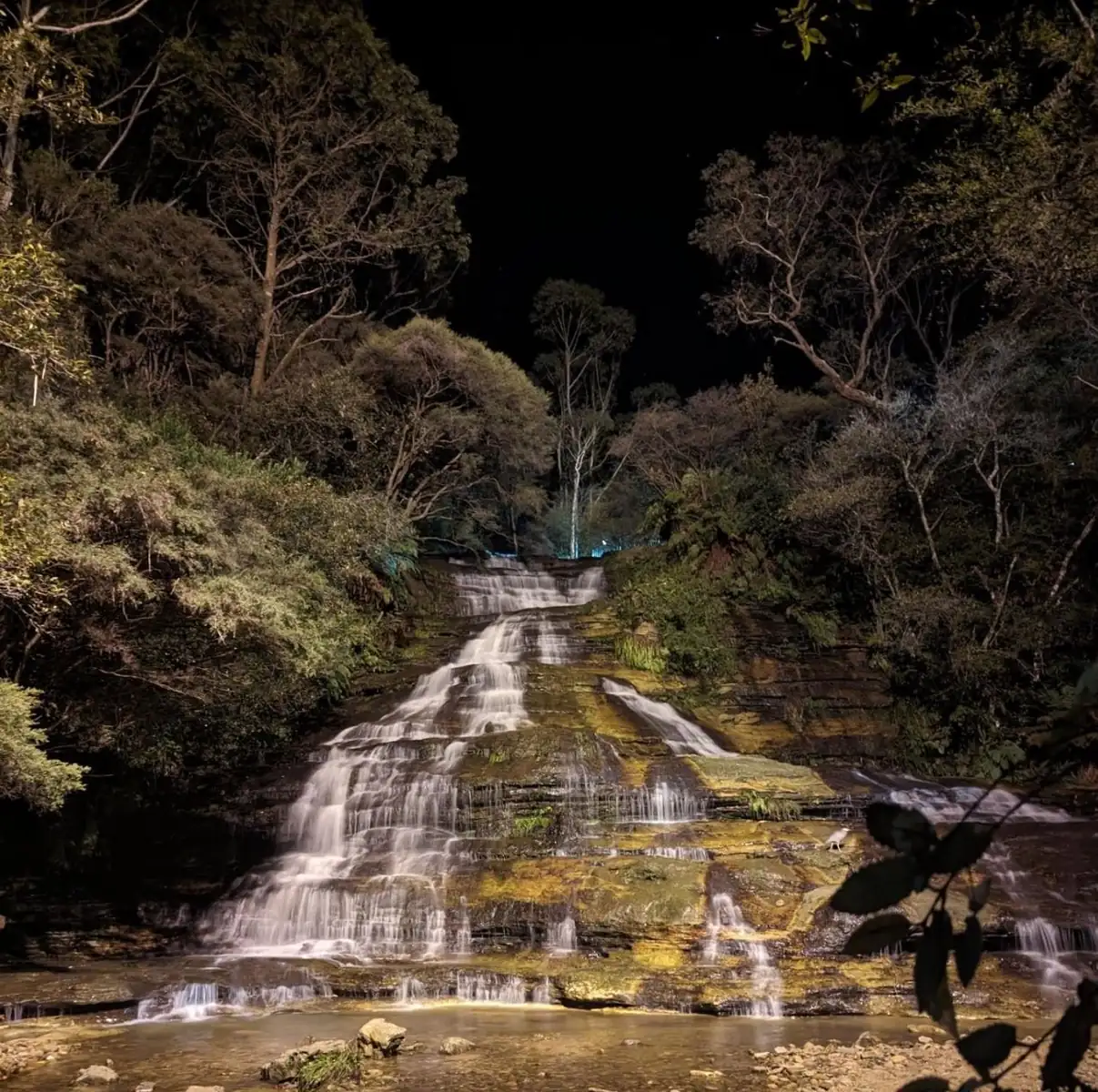
You can also check out the Katoomba Falls Night-lit Walk for a more controlled night experience. If you’re part of a Blue Mountains Tour, ask them about getting some evening views instead of a full-on night hike. Plenty of people first visit Sydney on the Blue Mountains tours and come back with a better plan for after-dark visits.
A Quick Yarn From Experience
One winter evening, I took a group down part of the track a little after sunset – sunset wasn’t even midnight yet. As we made our way halfway to the valley, the fog rolled in and swallowed the steps. Couldn’t see more than a couple of feet in front of us.
We turned straight back around – no point in debating it. Out here, conditions can change fast, and the bush doesn’t care about your plans – it just is.
Final Takeaway — Make The Smart Call
So is it safe?
Yes – but you’d have to have your act together with gear, prep and experience.
Most people are too smart to try to tackle it in the dark – just enjoy the stars from Echo Point or one of the nearby lookouts and save the full descent for daylight.